Space Sustainability Investments: SSA, Space Debris and Future Technologies
Author: Space Economy Academy.
Space sustainability investments are becoming increasingly important as Earth orbit grows more crowded and the long-term viability of space activities comes under greater pressure. Just as we care about the sustainable development of our planet, we also need to think seriously about the sustainable development of space. As knowledge of space expands, so does awareness of how dependent modern societies are on space infrastructure, data and orbital services.
Space provides much more than most people realise. Satellites launched almost every day generate data and services that support communications, navigation, weather forecasting, thermal imaging, climate monitoring, Earth observation and global connectivity. Thanks to satellite data, anyone with a smartphone and internet access can navigate worldwide, access real-time information and use services that depend on space infrastructure without even noticing it.
Satellite imagery also helps assess the scale of destruction after floods, earthquakes or armed conflicts, improving operational response, financial planning and public decision-making. These are only a few examples of the broad range of applications that can improve quality of life on Earth and help protect the planet. At the same time, the rapid growth in the number of satellites, especially small satellites and CubeSats, is creating increasing pressure on near-Earth orbital regions.
Explore the Space Economy course at SEAC
Why Low Earth Orbit Is Becoming More Crowded
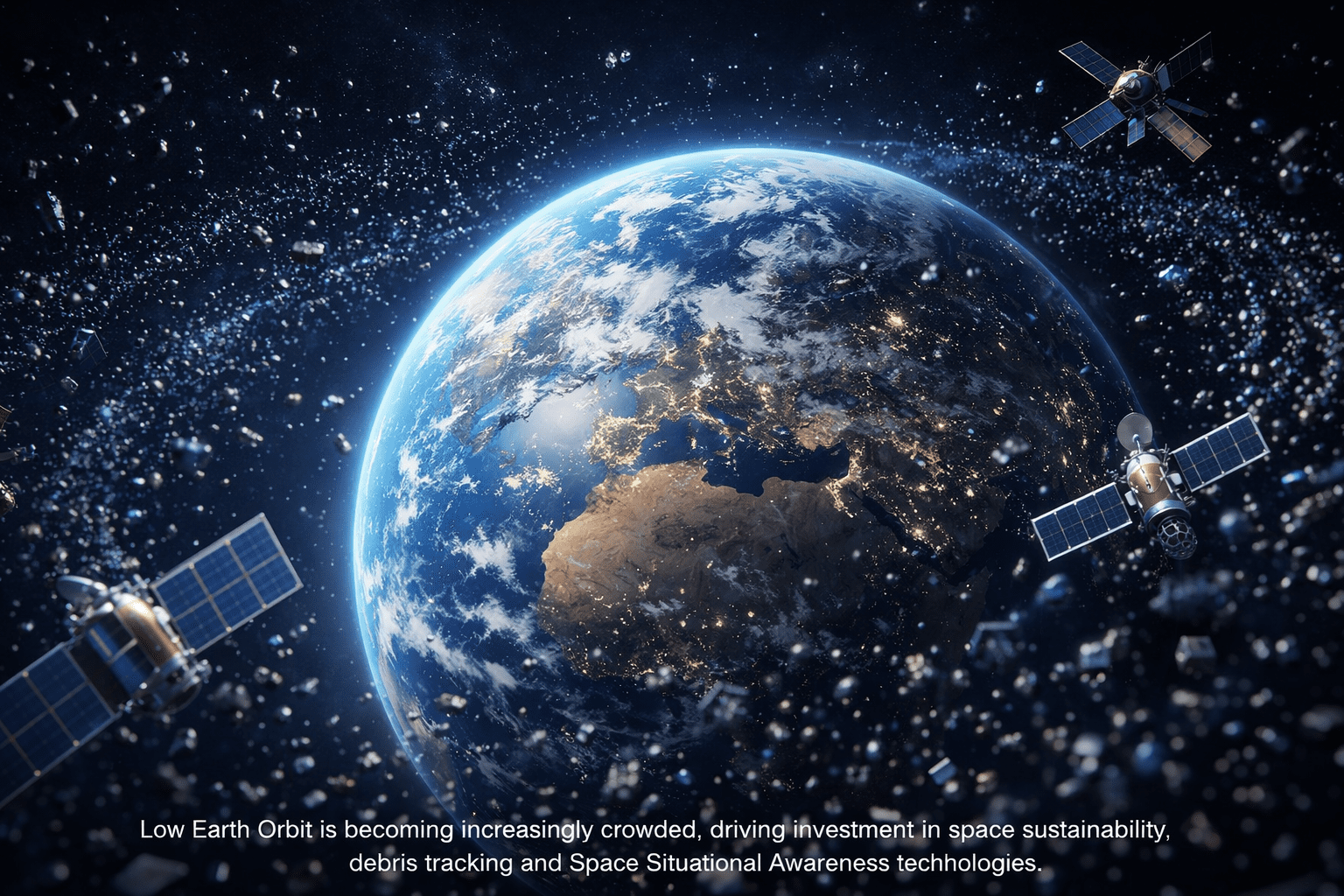
One orbital region has become especially crowded: Low Earth Orbit (LEO), extending roughly from 160 to 2,000 km above Earth. This belt is highly attractive for companies and organisations deploying their own satellites, mainly because launching into LEO requires less energy than reaching higher orbits. It also offers high bandwidth, lower latency for communications and easier access for operational missions, including astronaut servicing or repair activities.
Because of these advantages, the LEO market has strong growth potential. However, the same features that make LEO commercially attractive also make it increasingly congested. As the number of satellites, upper stages, fragments and inactive objects rises, the need for integrated, scalable and sustainable solutions becomes more urgent.
What Space Sustainability Means
Space sustainability is the practice of conducting space activities in a way that preserves the long-term viability of the space environment. The concept is based on preventing the creation of new threats, reducing the risk of collisions, and ensuring that future generations can continue to use space safely and productively.
In practical terms, space sustainability is closely linked to better management of orbital traffic, stronger coordination between space actors, and more effective detection and tracking of potential hazards. As launch activity increases and orbits become more populated, sustainability becomes both a technical necessity and a strategic investment priority.
Space Situational Awareness, STM and STC
Three concepts are central to this discussion: Space Situational Awareness (SSA), Space Traffic Management (STM) and Space Traffic Coordination (STC).
Space Traffic Management
STM refers to the regulatory and operational coordination of space activities in order to avoid collisions and harmful interference between spacecraft. It includes the establishment of rules, guidelines and protocols that govern the use of orbits and the behaviour of satellites and other space objects. STM also involves technologies and operational systems that support real-time tracking and manoeuvring to reduce conflict risk.
Space Traffic Coordination
STC places more emphasis on non-regulatory cooperation among governments, agencies, international organisations and private companies. Its goal is to promote safety, stability and sustainability in space operations by improving collaboration, data sharing and good practices.
Space Situational Awareness
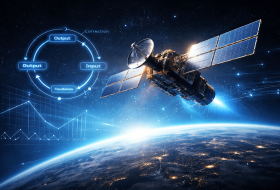
SSA is the broader concept that includes the ability to detect, track and understand what is happening in space. It covers active satellites, debris, launchers, inactive objects and other elements that may pose operational risks. SSA is essential for predicting conjunctions, preventing collisions, managing traffic and responding to possible threats.
Within SSA, Space Surveillance and Tracking (SST) is a more specific subset focused on monitoring objects and predicting collision risks. SSA also extends beyond debris tracking to include monitoring of space weather and Near-Earth Objects (NEOs), both of which can affect space missions and long-term safety.
Why Space Situational Awareness Matters
SSA has become one of the most important pillars of sustainable space operations because it transforms uncertainty into operational awareness. Without reliable awareness of what is in orbit, where it is moving and how risks evolve, satellite operators cannot make effective decisions.
This is especially important because debris can range from large defunct spacecraft to very small fragments. Even millimetre-sized particles can cause severe damage at orbital velocity, while larger fragments can generate catastrophic collisions that produce hundreds or thousands of additional debris objects.
As a result, space sustainability investments increasingly focus on improving SSA, not only to protect existing assets but also to preserve the long-term viability of the orbital environment itself.
Challenges of Implementing Space Situational Awareness
Implementing a comprehensive and effective SSA system still faces major challenges. One of the most significant is the lack of international regulations and standards. While some countries and organisations have made progress in STM and SSA, global coordination remains limited and fragmented.
Another challenge is financial. Without sufficient funding, SSA capabilities cannot be scaled to the level required by today’s orbital environment. Building sensor networks, improving data processing, enhancing predictive models and supporting collision-avoidance services all require sustained investment.
Data sharing is another major obstacle. The effectiveness of global space monitoring depends heavily on cooperation between stakeholders, but commercial, military and political constraints often limit the exchange of information. Even with international initiatives such as the Inter-Agency Space Debris Coordination Committee, full collaboration remains difficult.
Space Debris as a Driver of Future Investment
One reason why these challenges must be addressed quickly is the growing number of debris objects in orbit. Space debris is now one of the strongest drivers behind space sustainability investments, because it creates direct operational, technical and economic risks.
Smaller fragments are especially dangerous because they are hard to detect but still large enough to disable spacecraft components. Larger fragments can trigger catastrophic collisions, particularly in LEO, producing cascades of new debris. This is why debris growth is not just a background problem. It is a market driver pushing investment into tracking, data fusion, analytics, active debris removal and related services.
Despite progress, current technology still struggles to track the smallest fragments that may nevertheless cause major damage. This gap creates a strong need for continued research and development, as well as public and private support for future solutions.
Funding Programs for Space Sustainability in Europe
In Europe, sustainable space initiatives are supported through several funding instruments. Horizon Europe supports research and development linked to the protection of EU space infrastructure, including debris mitigation and active debris removal technologies.
The European Innovation Council Pathfinder also funds deep-tech projects at early technology readiness levels, providing grants together with mentoring, networking and business support. In parallel, ESA has allocated major funding to space safety and sustainability programmes, including initiatives such as its Zero Debris approach for Earth and lunar orbits.
These programmes show that Europe increasingly sees space sustainability investments not as optional, but as essential to protecting the long-term value of its space assets and capabilities.
Funding and Investment in the United States
In the United States, both NASA and the U.S. Space Force have allocated significant budgets to debris mitigation, space surveillance, SSA and traffic management. These investments reflect a broader recognition that orbital safety is now a strategic issue tied to national infrastructure, commercial competitiveness and long-term access to space.
Public sector investment also supports the creation of data services and operational tools that can later be used by private actors, helping create a broader ecosystem of sustainability and awareness technologies.
Private Sector Investment in Space Sustainability
The private sector has also recognised the importance of sustainability and awareness technologies. Venture capital firms and specialised space investors increasingly support companies working in propulsion, cybersecurity, SSA, orbital services and sustainable operations.
This trend matters because the private sector is often able to move faster in bringing services to market. Start-ups and growth-stage companies can test innovative approaches to debris monitoring, orbital analytics and traffic coordination in ways that complement public infrastructure.
Examples of Funded SSA and Sustainability Solutions
Technological progress in monitoring spacecraft and debris has improved significantly, but it still addresses only part of the orbital challenge. Existing surveillance networks track many large objects, and commercial companies are expanding visibility across LEO by using radar, optical and data-driven approaches.
Companies such as LeoLabs have improved visibility for large numbers of objects in orbit, while emerging companies such as Spaceflux use optical sensor networks to provide more accurate and timely SSA data. Other firms, including NorthStar, are developing commercial SSA services to address the growing needs of satellite operators.
At institutional level, the Office of Space Commerce in the United States is developing TraCSS, a traffic coordination system intended to provide essential SSA data and services to civil and private operators. This reflects a wider move toward hybrid public-commercial ecosystems in which data services and operational coordination are increasingly shared across sectors.
Active Debris Removal and Future Cleanup Missions
Monitoring debris is only the first step. As the number of satellites and fragments continues to rise, the likelihood of collisions also increases. If congestion keeps worsening, navigating through LEO to reach higher orbits may become far more difficult and expensive.
This risk has triggered growing interest in active debris removal. Missions such as ClearSpace-1 demonstrate how sustainability investments are moving from analysis and monitoring toward direct intervention. Other companies, including Astroscale, are also advancing demonstration missions aimed at deorbiting or servicing objects that would otherwise contribute to long-term congestion.
These missions are still early, but they are extremely important. They represent one of the clearest signs that space sustainability investments are beginning to shift from awareness to action.
Why Investments in Future Technologies Matter
Investments in future technologies related to space awareness and sustainable development matter because the orbital environment is becoming a critical infrastructure layer for modern society. Communications, navigation, climate monitoring, security and economic services increasingly depend on space-based systems.
If orbital safety deteriorates, the consequences will not remain confined to the space sector. They will affect financial systems, logistics, environmental management, emergency response and the broader digital economy. In this sense, investing in SSA, STM, STC, debris monitoring and cleanup is not only about protecting satellites. It is about protecting the systems on Earth that rely on them.
Conclusion
Space sustainability investments are becoming one of the most important areas of the modern space economy. The growth of LEO, the rising number of satellites, the accumulation of debris and the need for safer orbital operations all make sustainability a strategic priority.
Space Situational Awareness, Space Traffic Management, Space Traffic Coordination and active debris removal are no longer niche topics. They are becoming essential capabilities for the future of the space sector. As public institutions, private investors and innovative companies continue to support these technologies, the prospects for a safer and more sustainable orbital environment will improve.
Discover the Space Economy course at SEAC
References
CubeSat growth and trends: https://spacenews.com/exponential-growth-of-cubesats-may-be-tapering-off/
ESA types of orbits: https://www.esa.int/Enabling_Support/Space_Transportation/Types_of_orbits
LEO communications overview: https://www.comarch.com/telecommunications/blog/leo-able-to-beat-the-world-and-space-in-2023/
LEO satellite market: https://www.marketsandmarkets.com/Market-Reports/leo-satellite-market-252330251.html
Near-Earth Objects: https://cneos.jpl.nasa.gov/ca/
IADC overview: https://iadc-home.org/what_iadc
EIC Pathfinder: https://eic.ec.europa.eu/eic-funding-opportunities/eic-pathfinder_en
ESA funding: https://www.esa.int/About_Us/Corporate_news/Funding
ESA Zero Debris: https://www.esa.int/Space_Safety/Clean_Space/ESA_s_Zero_Debris_approach
TraCSS: https://www.space.commerce.gov/traffic-coordination-system-for-space-tracss/
Frequently Asked Questions