

China Commercial Space Industry: The Future of the Global Space Economy
Author: Marcel Weber
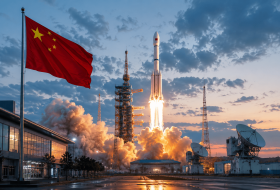
The China commercial space industry is rapidly becoming one of the most influential forces shaping the future of the global space economy. Over the past decade, China has transformed from a government-dominated space actor into a fast-growing commercial ecosystem that includes private launch companies, satellite manufacturers, Earth observation startups, AI-driven analytics firms, and space infrastructure providers.
As global demand for satellite connectivity, navigation services, geospatial intelligence, and launch capabilities continues to increase, Chinese space companies are positioning themselves as major participants in the evolving commercial space market.
Rather than focusing on geopolitics, the most important trend to understand is the emergence of China as a large-scale space business ecosystem. The country is investing heavily in reusable launch vehicles, satellite constellations, lunar exploration infrastructure, navigation systems, and commercial applications that support telecommunications, logistics, smart cities, agriculture, and autonomous systems.
Key Insight: The future of the global space economy will not be driven only by government agencies. Commercial ecosystems in Asia — especially China — are becoming central to satellite infrastructure, launch services, downstream applications, and emerging space business models.
Why China Is Becoming a Space Superpower
China’s rise in the space sector is the result of long-term strategic investment, industrial policy, advanced manufacturing capabilities, and strong integration between government programs and commercial innovation.
The Chinese space economy has expanded significantly due to increasing demand for satellite communications, navigation systems, Earth observation services, and launch capacity. At the same time, Beijing has encouraged the growth of private space companies capable of supporting national infrastructure and commercial markets.
One of the most important shifts occurred in 2014, when China officially opened parts of the space sector to private investment. Since then, hundreds of Chinese space startups have emerged across multiple domains:
- Commercial launch services
- Satellite manufacturing
- Earth observation analytics
- Satellite internet infrastructure
- GNSS and navigation applications
- Space robotics and AI
The result is a rapidly evolving ecosystem that increasingly resembles the broader global New Space movement. However, China’s model combines commercial innovation with strong industrial coordination, allowing projects to scale quickly.
This expansion is also supported by broader market trends, including the growth of digital infrastructure, autonomous transportation, climate monitoring, precision agriculture, logistics optimization, and smart manufacturing — all sectors that depend heavily on space-based services.
Top Chinese Space Companies to Watch
The commercial space China ecosystem now includes some of the fastest-growing launch and satellite companies in the global market. Several Chinese launch companies are developing reusable rockets, methane propulsion systems, and cost-efficient access to orbit.
LandSpace
LandSpace is one of the most recognized Chinese commercial rocket companies. The company gained international attention through the development of methane-liquid oxygen rocket technology, positioning itself within the global trend toward reusable and more efficient launch systems.
iSpace
iSpace became one of the first private space companies in China to successfully place a satellite into orbit. The company focuses on commercial launch services for small satellites and is actively developing reusable launch technologies.
Galactic Energy
Galactic Energy has rapidly emerged as another important player in the Chinese commercial space industry. Its launch systems target the growing demand for low-cost deployment of small satellites and constellation missions.
Beyond these companies, China’s space startup ecosystem also includes firms specializing in:
- Satellite constellations
- Remote sensing data
- Synthetic aperture radar
- Orbital logistics
- Space-based AI analytics
- Space tourism concepts
The scale of the Chinese market gives these companies access to substantial domestic demand while also enabling international expansion opportunities across Asia, Africa, the Middle East, and Latin America.
Understand the Business Side of the Space Economy
The rapid growth of the China commercial space industry highlights why professionals need to understand market dynamics, investment trends, satellite infrastructure, and emerging commercial opportunities.
SEAC’s Space Economy Course provides practical knowledge about the global commercial space market, New Space business models, and future industry trends.
Explore the Space Economy CourseThe Role of BeiDou and Satellite Infrastructure
One of the foundations of the Chinese space economy is the BeiDou Navigation Satellite System. Often compared to GPS, Galileo, and GLONASS, BeiDou has evolved into a global navigation infrastructure supporting transportation, logistics, maritime operations, precision agriculture, emergency response, and autonomous systems.
The importance of satellite infrastructure extends far beyond navigation. China is investing heavily in:
- Earth observation satellites
- Communications constellations
- Remote sensing platforms
- Space-based internet systems
- Geospatial intelligence services
These capabilities are increasingly connected with artificial intelligence, cloud computing, and big data analytics. As a result, the China satellite industry is becoming part of the broader digital economy.
Satellite navigation and positioning technologies are especially important for the future of autonomous transportation, smart cities, logistics optimization, and industrial automation.
For a deeper understanding of GNSS technologies and satellite navigation systems, explore: SEAC’s GNSS Systems Course.
China’s Commercial Space Market Opportunities
The future of China’s commercial space market is closely connected to global demand for space-enabled services. The industry is no longer limited to rockets and satellites; it increasingly includes data services, AI applications, digital infrastructure, and downstream analytics.
Satellite Manufacturing
The expansion of low Earth orbit constellations is creating massive demand for satellite production. Chinese manufacturers are scaling capabilities for communications, Earth observation, and navigation payloads.
Commercial Launch Services
The global increase in small satellites has generated strong demand for flexible and lower-cost launch providers. Chinese launch companies are positioning themselves to capture a significant share of this market.
Earth Observation and Geospatial Data
Remote sensing applications are becoming increasingly valuable across agriculture, insurance, urban planning, climate monitoring, energy infrastructure, and maritime logistics.
AI and Space Integration
Artificial intelligence is becoming a major driver of the future space economy. Chinese companies are integrating AI with satellite imagery, predictive analytics, and geospatial intelligence to create scalable commercial services.
Lunar Economy and Deep Space Infrastructure
China is also investing in long-term lunar exploration capabilities, including robotic systems, communications infrastructure, and potential resource utilization technologies. While still emerging, the lunar economy may eventually become an important commercial sector within the broader global space economy.
Market Trend: The most valuable segment of the future space economy may not be launch itself, but the downstream commercial services enabled by satellites, navigation systems, Earth observation, and AI-powered infrastructure.
What China Means for the Future Space Economy
The emergence of the China commercial space industry represents one of the most important structural shifts in the global space economy.
The industry is creating opportunities not only for engineers and government agencies, but also for entrepreneurs, investors, analysts, software companies, logistics providers, telecommunications firms, and infrastructure developers.
In many ways, the future of the space economy will depend on how effectively countries and companies integrate space infrastructure into everyday commercial activities.
China’s rapid expansion demonstrates that the space sector is becoming increasingly interconnected with:
- Digital transformation
- Artificial intelligence
- Telecommunications
- Autonomous mobility
- Climate intelligence
- Global logistics networks
For professionals entering the sector, understanding these commercial trends is becoming just as important as understanding the underlying technologies.
The future space economy will likely be shaped by a combination of satellite infrastructure, private investment, reusable launch systems, geospatial intelligence, and international commercial ecosystems. China is positioning itself as one of the key actors within that transformation.
Build Expertise in GNSS and the Global Space Economy
China’s investment in BeiDou, satellite infrastructure, and commercial space applications highlights the growing importance of GNSS and space economy knowledge for professionals worldwide.
SEAC offers specialized courses designed for engineers, analysts, entrepreneurs, and professionals entering the commercial space sector.
Conclusion
The China commercial space industry is becoming a major pillar of the future global space economy. Through investments in launch systems, satellite infrastructure, navigation services, Earth observation, and AI-enabled analytics, China is building one of the world’s most dynamic commercial space ecosystems.
The most important trend is not geopolitical competition, but the expansion of commercial space applications across industries such as logistics, telecommunications, mobility, agriculture, infrastructure monitoring, and climate intelligence.
As the global space economy continues to evolve, professionals who understand commercial space markets, satellite infrastructure, GNSS systems, and emerging business opportunities will be increasingly well-positioned within the industry.
Frequently Asked Questions About China Commercial Space Industry
What is the China commercial space industry?
The China commercial space industry includes private and semi-private companies involved in launch services, satellite manufacturing, Earth observation, navigation systems, and space-based applications. Since market liberalization, Chinese space startups have expanded rapidly across commercial infrastructure, geospatial analytics, telecommunications, and downstream space services.
Why is China investing heavily in commercial space?
China views commercial space as a strategic growth sector connected to digital infrastructure, telecommunications, navigation services, artificial intelligence, and economic modernization. Investments support technological innovation, industrial development, satellite applications, and long-term expansion of the national and international space economy ecosystem.
Which are the top Chinese space companies?
Some of the leading Chinese space companies include LandSpace, iSpace, and Galactic Energy. These firms focus on commercial launch systems, reusable rockets, and small satellite deployment. Many additional Chinese startups are also emerging in satellite communications, Earth observation, and space infrastructure services.
What is BeiDou and why is it important?
BeiDou is China’s global satellite navigation system, providing positioning, navigation, and timing services worldwide. It supports logistics, transportation, agriculture, autonomous systems, and telecommunications. BeiDou is also a major pillar of China’s satellite infrastructure and broader commercial space strategy.
How large is the China space economy?
The China space economy has grown significantly over the past decade due to investments in satellites, launch systems, navigation services, and commercial applications. Analysts increasingly view China as one of the world’s largest emerging commercial space markets with strong long-term expansion potential.
What opportunities exist in the Chinese satellite market?
The China satellite market offers opportunities in communications, remote sensing, navigation, Earth observation, AI analytics, and geospatial intelligence. Demand for satellite-enabled infrastructure is increasing across industries including agriculture, logistics, environmental monitoring, insurance, and smart city development.
Are private space companies growing in China?
Yes, private space companies in China have expanded rapidly since the government opened parts of the space sector to commercial investment. Hundreds of startups are now active in launch services, satellite manufacturing, robotics, remote sensing, and AI-powered geospatial applications.
What role does AI play in China’s space industry?
Artificial intelligence is increasingly integrated into China’s commercial space sector through satellite analytics, automated image processing, predictive monitoring, and geospatial intelligence. AI enhances the commercial value of satellite data and enables scalable applications across multiple industries and infrastructure systems.
What are Chinese commercial rockets used for?
Chinese commercial rockets are primarily used to launch small satellites, Earth observation payloads, communications systems, and constellation missions into orbit. They support the growing demand for affordable launch services and help expand China’s role within the global commercial launch market.
What is the future of the China commercial space industry?
The future of the China commercial space industry will likely involve reusable launch systems, larger satellite constellations, AI-driven space services, lunar infrastructure, and expanded international commercial partnerships. China is expected to remain one of the most influential actors in the future global space economy.