

The Space Industry Evolution: From Broadcast Milestones to Global Connectivity
Author: Veronica Rivas Boscan
The space industry evolution has transformed how humanity communicates, navigates, and interacts with the world. What was once perceived as a domain limited to exploration and scientific research has become a critical infrastructure supporting everyday life on Earth.
A defining moment that highlighted this transformation was a historic live broadcast watched simultaneously by millions of users worldwide. It was not only a milestone in human achievement, but also a powerful demonstration of the capabilities of global communication networks supported by space technologies.
For many observers, especially those with a background in telecommunications, it raised fundamental questions: how can such massive traffic be distributed globally in real time? What infrastructure supports such scalability? And what role does space play in enabling this level of connectivity?
This realization marked a shift in perception: the space sector is not only about rockets and exploration—it is a foundational industry that powers communication, entertainment, navigation, and data services across the globe.
Key insight: The space industry is no longer a niche sector—it is a core pillar of the global digital economy, enabling real-time connectivity and data-driven services worldwide.
What Is the Space Industry Today?
Space industry evolution refers to the transformation of space activities from government-led exploration programs to a dynamic ecosystem involving private companies, commercial services, and global infrastructure.
Today, the space sector supports critical services such as satellite communications, Earth observation, global navigation systems, and defense applications. These technologies are deeply embedded in daily life, powering everything from GPS navigation and weather forecasting to video streaming and financial systems.
The increasing accessibility of space technologies has also opened the door to private companies and startups, accelerating innovation and reducing costs across the entire value chain.
The Rise of Global Connectivity Through Satellites
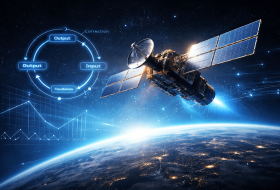
One of the most impactful aspects of the space industry evolution is its role in enabling global connectivity. Satellite networks make it possible to transmit massive volumes of data across continents in real time.
This capability supports live broadcasting, internet access in remote regions, disaster response coordination, and global communication systems. Without satellites, many of these services would be either limited or impossible to scale globally.
The growing demand for connectivity continues to drive the expansion of satellite constellations and advanced communication technologies.
Start Your Career in Space Technology
The rapid evolution of the space industry is creating new opportunities across engineering, telecommunications, data science, and more.
SEAC’s Space Technology course provides a comprehensive foundation in satellite systems, space missions, and emerging industry trends.
Satellite Growth and New Space Trends
The number of operational satellites in orbit has grown significantly, reflecting the increasing demand for connectivity, monitoring, and commercial applications.
One of the most important trends is the development of smaller, lighter satellites such as CubeSats and NanoSats. These platforms reduce manufacturing and launch costs, making space more accessible to startups, universities, and private companies.
At the same time, reusable launch systems are transforming the economics of space missions, enabling more frequent and cost-effective access to orbit.
New Orbits and Advanced Technologies
The evolution of the space industry also includes the use of new orbital regimes such as Low Earth Orbit (LEO) and Very Low Earth Orbit (VLEO). These orbits enable lower latency communications, improved Earth observation capabilities, and more efficient satellite constellations.
In parallel, advancements in transmitters, receivers, and data processing technologies are making satellite systems more resilient to interference, failures, and cyber threats.
Security and Innovation in Space Systems
As reliance on space-based services increases, so does the need for secure and reliable systems. Innovations such as navigation message authentication and satellite-based quantum cryptography are being developed to protect critical infrastructure.
These technologies aim to ensure data integrity, prevent spoofing, and enhance cybersecurity in satellite communications and navigation systems.
Technology trend: The future of the space industry lies in secure, scalable, and intelligent satellite systems supporting global digital infrastructure.
The Challenge of Space Debris
One of the major consequences of rapid space expansion is the accumulation of space debris. As more satellites are launched, the risk of collisions increases, posing a threat to operational missions.
This challenge has led to the emergence of new companies focused on debris removal and space traffic management. These solutions are essential to ensure the long-term sustainability of space activities.
The Future of the Space Economy
The space industry evolution is driving the growth of a global space economy that extends far beyond traditional aerospace activities. Commercial services, private investment, and technological innovation are shaping a new era of space accessibility.
From global internet coverage to advanced navigation systems and planetary exploration, the possibilities continue to expand as the industry evolves.
Build Expertise in the Space Industry
Understanding how the space industry works is essential for anyone looking to enter this rapidly growing sector.
The SEAC Space Technology course provides practical knowledge on satellite systems, missions, and industry applications.
Conclusion: A Connected World Powered by Space
Space industry evolution has redefined how society operates, transforming space into a critical enabler of modern life. What once seemed extraordinary is now part of everyday infrastructure.
The future will continue to push boundaries, driven by innovation, accessibility, and the growing importance of global connectivity.
Frequently Asked Questions About the Space Industry Evolution
What is the space industry?
The space industry includes all activities related to the development, launch, and operation of satellites and space systems. It supports communication, navigation, Earth observation, and scientific research, forming a critical part of modern global infrastructure.
Why is the space industry important?
The space industry is essential because it enables global connectivity, accurate navigation, weather monitoring, and data services. Many everyday technologies, including GPS and internet services, rely on space-based infrastructure.
What are CubeSats and NanoSats?
CubeSats and NanoSats are small satellites designed to reduce costs and increase accessibility to space. They are widely used for research, communication, and commercial applications.
What challenges does the space industry face?
The main challenges include space debris, regulatory complexity, cybersecurity risks, and the need for sustainable space operations as the number of satellites continues to grow.
What is the future of the space industry?
The future of the space industry includes increased commercialization, advanced satellite networks, improved connectivity, and new applications such as space-based internet and deep-space exploration.