Space Operations (Professional Certificate)
- Space
- 322 (Registered)


Satellite Operations at Scale — Missions, Ground & Growth
According to the United Nations Office, the number of objects launched into space is of about 2000 every year. The mission operations registered a record this year with over 186 successful rocket launches (41 more than in previous year). The Space Industry is witnessing the biggest transformation with the creation of new Space Agencies and the largest amount of Space Missions, focusing on National Security (30%), Satellite Communications (24%), and Edge Computing and Earth Observation (10%).
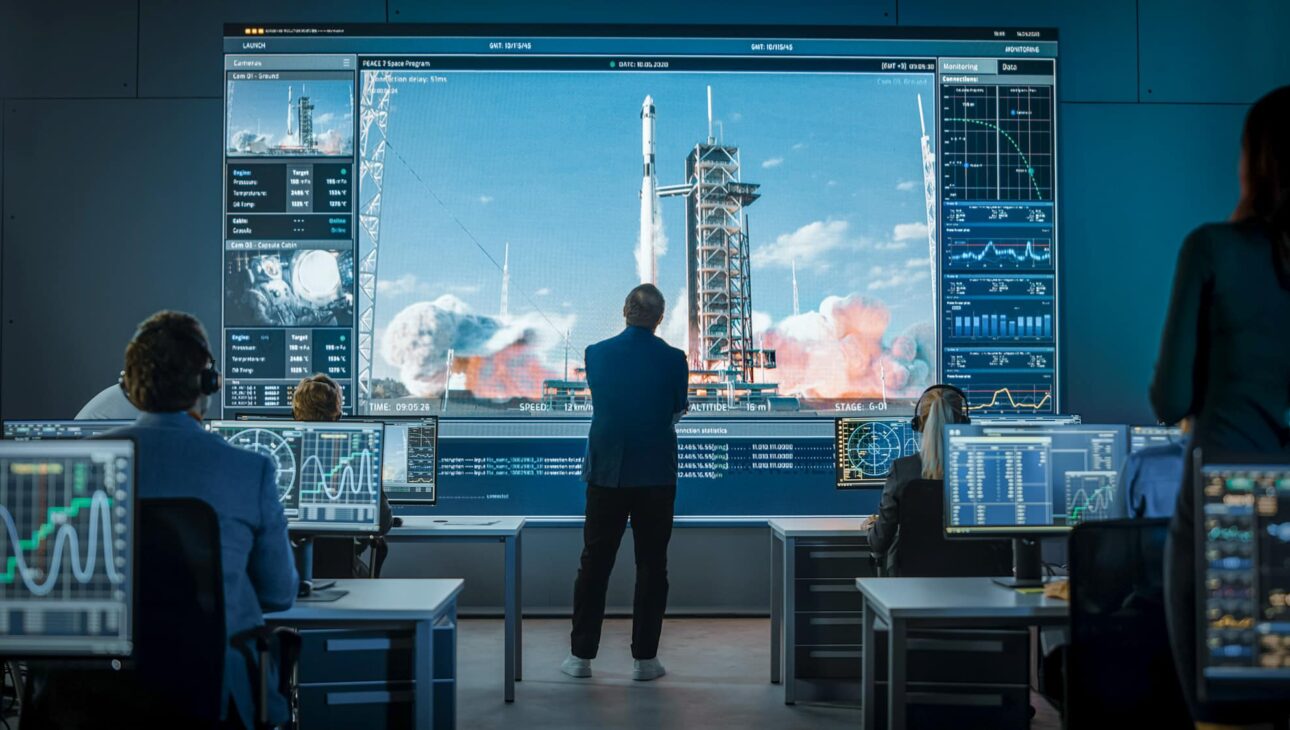
Around the world, Space Agencies and Industries operate space objects from their Mission Control Centers. Spacecraft and Ground Controllers, together with a team of analysts, officers, engineers and managers perform continuous satellite control and monitoring using ground segment software and equipment.
Furthermore, the emergence of reusable rocket technology is revolutionizing satellite launches, making them more cost-effective and sustainable. These trends reflect a dynamic shift in satellite operations, characterized by innovation, commercialization, and a growing diversity of players in the space industry.
Overview of the Space Operations Course
SEAC professional online course Space Operations is a program aiming at providing an end-to-end understanding of spacecraft operations. Through the course, students will navigate all the phases of a mission lifecycle, from planning and management activities, to Launch and Operations, focusing on the latest technologies for the Propulsion systems. The course is of great value to both individuals as well as to companies and agencies involved in the area of spaceflight.
The Space Operations course is built of 4 modules to cover the growing demand for business education in the field. The student experiences a 6-weeks program with an international curriculum and faculty at inspirational learning venues all over the world. Get exposed to real challenges explained by experienced leaders across a variety of industries, and gain the tools and skills to drive into the Space Operations field.
This course is intended for engineers, project managers, and professionals involved in the development or operations of space missions who require a structured understanding of Space Operations and their role across mission activities. It is particularly relevant for professionals seeking to understand key operational domains such as mission planning, orbital mechanics, ground segment integration, propulsion systems, and satellite communications throughout the lifecycle of a space mission.
The program is also valuable for managers and technical leaders who require a broader perspective on how operational activities are coordinated across different elements of a space mission and across multiple mission phases. Through a practical and structured approach, participants develop the knowledge required to understand operational processes and apply them effectively within space agencies, industry programs, and international space missions.
The skills you will develop
Space Operations are a critical component in the execution and management of space missions across the international space industry. Through this course, participants gain a structured understanding of how operational activities are planned, coordinated, and executed throughout the lifecycle of a space mission
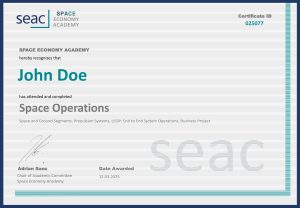
SEAC – Certificate of Completion
Advance your career in Space Operations with SEAC—first-prize winner of the Galileo Masters University Challenge. Incubated at ESA BIC Hessen with leading industry partners, you’ll earn a Certificate of Completion in Space Operations.
Companies & Professional Training
SEAC – Space Economy Academy supports companies, space agencies, and institutions in the professional development of their teams through specialized training in the space sector. Our programs combine industry insight with practical knowledge of the global space economy, helping professionals understand the strategic, technological, and commercial dimensions of the industry. Designed for both technical and managerial profiles, SEAC courses enable organizations to strengthen internal expertise and develop the capabilities required to operate within the international space sector.
Many organizations choose to enroll several participants in the same program in order to develop shared expertise across their teams and strengthen internal capabilities. Companies enrolling groups of 3 or more participants benefit from exclusive corporate discounts, facilitating the training of multiple team members within the same program. In addition to open-enrolment courses, SEAC can also deliver tailor-made training programs for companies, providing turnkey solutions aligned with specific organizational needs and training objectives.
Space Operations Programme Questions
Key information about the programme format, certificate, tutor feedback, mission operations applications, and brochure download.
How is the Space Operations course delivered?
The Space Operations programme is delivered through a flexible online learning format designed for engineers, managers, and professionals working in the space sector. Participants can access the educational platform according to their own schedule while progressing through the modules and practical assignments.
Will I receive a professional certificate?
Yes. Participants who successfully complete the programme receive a professional Certificate of Completion issued by SEAC – Space Economy Academy, incubated at ESA BIC Hessen and awarded by the Galileo Masters competition.
Will I interact with lecturers or tutors during the programme?
Yes. Participants complete assignments during the programme and receive individual feedback from tutors and industry professionals. SEAC also organizes selected webinars, alumni events, and industry sessions throughout the year.
Is the programme suitable for working professionals?
Absolutely. The programme was specifically designed for professionals who need flexibility alongside their work responsibilities. Participants can progress through the content at their own pace while maintaining full access to the educational platform and future course updates.
How can the Space Operations course support professionals and companies?
The programme provides a structured understanding of mission operations, spacecraft lifecycle activities, ground segment systems, orbital operations, propulsion technologies, and operational coordination across space missions. It is particularly valuable for engineers, technical managers, mission analysts, aerospace professionals, and organizations seeking to strengthen operational expertise across commercial and institutional space programs.
Where can I download the programme brochure?
The official programme brochure includes detailed information about the curriculum, lecturers, assignments, certificate, learning outcomes, and course structure.
Curriculum
- 5 Sections
- 35 Lessons
- Lifetime
- 1. Planning10
- 1.11.1. Introduction
- 1.21.2. Project Management
- 1.31.3. Project Standards
- 1.4Reading : A Platform Specification of a Space Project Management Handbook
- 1.51.4. Mission Lifecycle
- 1.61.5. Roles and Responsibilities
- 1.71.6. Typical Documents
- 1.8Quiz Operations : Planning
- 1.9ESA Masterclass: Paolo Ferri on the culture at mission control
- 1.10Assignment 1 with research study
- 2. Launch8
- 3. Operation8
- 4. Propulsion8
- 5. Essay1
Lecturer

Related Courses