

Space Economy Explained: Sectors, Investments, Start-Ups and Global Drivers
Author: Space Economy Academy.
The space economy has been defined by the OECD as the full range of activities and the use of resources that create value and benefits to human beings in the course of exploring, researching, understanding, managing and utilising space. Today, the space economy is no longer a niche topic reserved for engineers and space agencies. It has become a strategic economic domain that affects governments, private companies, financial markets, digital infrastructure and many non-space industries.
The space sector has changed profoundly over the last decades under multiple aspects: the number of players has increased, the nature of the players has diversified between public and private actors, the type of investments has evolved, and the geographical distribution of space capabilities has expanded worldwide. Probably the most important transformation in the modern space economy is that the space sector is no longer a separate field isolated from the rest of industry. Its impact is now visible across both space and non-space sectors, including agriculture, medicine, finance, telecommunications, logistics and climate monitoring.
Explore the Space Economy course at SEAC
What Is the Space Economy?
The space economy goes far beyond rockets, satellites and astronauts. It includes all economic activities linked directly or indirectly to space technologies, infrastructure, services and applications. This means that the space economy covers both the organisations that build and launch space systems and the industries that use space-based data and services here on Earth.
In this sense, the old “space race” has gradually evolved into the space economy. What once was dominated by a small number of superpowers has now become a broader and more global ecosystem. Between the launch of the first space programmes and the present day, the number of countries participating in space activities has expanded from just a few to well over eighty. This growth is expected to continue in the coming decades.
Upstream and Downstream Segments of the Space Economy
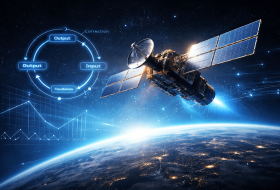
The two broad segments that characterise the space economy are the upstream and downstream segments. This division is fundamental because it helps explain how value is created across the full space ecosystem.
Upstream Segment
The upstream segment includes the technologies and industrial activities that go from Earth to space. It is closely linked to the creation, production and launch of space systems. Typical upstream activities include:
- space and ground research activities,
- space and ground manufacturing,
- launcher development and launch services,
- spacecraft, satellite and payload production,
- core engineering and system integration activities.
Downstream Segment
The downstream segment includes technologies, products and services that bring value from space to Earth. It is where many of the visible economic benefits of space appear in everyday life. This segment includes:
- space operations for terrestrial use, such as GNSS data and Earth observation,
- products and services delivered for Earth applications,
- telecommunications and satellite internet,
- location-based services and mobility solutions,
- analytics, insurance, logistics and environmental applications using space data.
Understanding these two segments is essential because the strongest growth in the space economy often comes from the interaction between upstream innovation and downstream commercialisation.
Space Economy and International Politics
The importance of the space economy has grown year after year and has increasingly attracted attention at the international political level. Space technologies, research and applications have improved daily life and generated visible social and economic benefits. This is why space is now widely recognised not only as a technological domain, but also as a strategic policy area.
A major milestone was reached when the G20 included the space economy in its agenda under the theme of promoting space cooperation. This marked an important shift: space was no longer seen only as a scientific or defence field, but as a contributor to international stability, global cooperation and economic development.
International institutions such as UNOOSA have also highlighted the relevance of the space sector through programmes related to Earth Observation, satellite navigation and sustainability. Space activities increasingly support climate monitoring, disaster management, food security, mobility and many services linked to long-term resilience.
Among the most important global priorities is the transition toward greener and more sustainable economies. In this context, the space economy has become a catalyst for the Sustainable Development Goals. Although there is no dedicated SDG specifically for space, the idea of Space for SDGs has become widely recognised.
Space Economy Education
The new approach to the space economy has led to the development of dedicated educational programmes that go beyond the traditional engineering perspective. For many years, universities prepared engineers mainly to design and develop space technologies. Today, however, the sector also needs professionals who understand strategy, markets, public-private cooperation and ecosystem development.
As a result, more education programmes now focus on the business side of the space sector. These programmes prepare professionals to work across policy, investment, project management, innovation ecosystems and international cooperation.
Industry and institutions increasingly seek profiles capable of building public-private partnerships and connecting technical opportunities with strategic growth. New roles arise regularly under titles such as strategic innovator, space transformation officer, PPP specialist or space ecosystem officer.
These professionals often require a technical background combined with broader knowledge of project management, international ecosystems, regulation, policy and business development. In practice, they are hybrid profiles capable of defining strategies that keep organisations and institutions competitive in a rapidly changing market.
Start-Ups in the Space Economy
One of the most dynamic parts of the modern space economy is the rise of start-ups. A start-up is a new company that brings a new or improved service or product into the market. This model has become increasingly popular worldwide, and the same is true in the space sector, where a growing number of new ventures are emerging across many countries.
Space start-ups contribute to both the upstream and downstream segments. Some focus on manufacturing, launch systems, satellite subsystems or debris mitigation technologies, while others develop digital services, analytics, Earth observation applications, satellite communications tools or data-based business models.
To be founded and scaled, a start-up typically requires significant investment. Funding can come from public programmes such as incubation schemes and accelerators, as well as from private investors such as business angels, venture capital funds and strategic partners.
The relationship between start-ups and established agencies or industries is often shaped through different forms of public-private partnerships. In some cases, agencies support start-ups under more flexible conditions than those normally applied to large industrial actors, allowing younger companies to enter the market more easily and test innovative approaches.
Investments in Space Start-Ups and the Space Sector
Investment is one of the strongest indicators of confidence in the space economy. Over the last decade, both public and private capital have played a major role in expanding the sector. Governments continue investing heavily in agencies, infrastructure and strategic programmes, while venture capital, private equity, business angels and institutional investors increasingly support commercial space ventures.
Space start-up investment has grown significantly, with a large share of capital concentrated in a relatively small number of major companies. This reflects both the attractiveness of the sector and the scale advantages enjoyed by a few dominant actors. Nevertheless, the broader investment trend shows that investors increasingly view the space economy as a serious long-term market rather than a speculative niche.
At global level, the growth of space investments is linked not only to launch and manufacturing, but also to downstream services, digital platforms, geospatial analytics, mobility, defence, connectivity and future emerging markets.
Top Drivers of the New Space Economy
The new space economy is driven by a combination of technology, policy, market demand and strategic necessity. While technology remains central, several other drivers shape the speed and direction of growth.
Sustainable Development Goals and Public Policy
As discussed earlier, the SDGs are an important driver because space technologies contribute to climate action, food security, resilient infrastructure and environmental monitoring. Public policy therefore plays a powerful role in expanding space demand.
Space Debris and Orbital Sustainability
Space debris is another major driver. The increase in orbital congestion is pushing the development of new technologies, services and start-ups focused on tracking, mitigation and removal. This challenge is not only technical but also commercial and regulatory.
Commercialisation and Public-Private Partnerships
The economic dimension of the space economy is a major force behind its expansion. The commercialisation of space is creating new businesses, and more industries and agencies are increasingly willing to establish public-private partnerships to accelerate innovation and reduce risk.
Security and Data Protection
New market requirements are also driving development. Security is one of the most important of these, both in ground systems and in the protection and transmission of data through satellite infrastructures.
Satellite Internet and Global Connectivity
If internet is one of the most widely used technologies in the world today, satellite internet is becoming one of the most important frontiers connecting space with Earth. Connectivity, especially in remote and underserved regions, is one of the clearest commercial growth areas in the sector.
Emerging Frontiers: Space Mining and Space Tourism
Two highly discussed frontiers in the evolving space economy are space mining and space tourism. Many companies are exploring these markets, although there are still major technical, regulatory and business uncertainties to resolve before large-scale adoption becomes realistic.
Investments in the Space Economy
Investments do not appear to be a constraint for the long-term development of the space economy. Both public and private actors continue to invest in space agencies, technologies, start-ups and infrastructure around the world.
Historically, the launch of Sputnik marked the beginning of a new technological, scientific, political and military age. Later milestones, such as the Moon landing, demonstrated that space activity was not only symbolic but transformational. Since then, the number of space actors has expanded significantly, and competition has intensified.
This increased competition has also expanded investments across multiple segments of the space sector, helping foster more sustainable long-term growth in capabilities, industrial ecosystems and services.
Government expenditure alone has reached very high levels globally, with a substantial share concentrated in the United States. At the same time, market analyses from major financial institutions continue to show a positive trend in commercial investment and overall economic impact.
The total economic impact of the space economy has been estimated in the hundreds of billions of dollars and continues to grow. This reinforces the idea that space is no longer a peripheral market. It is becoming a major frontier of global economic development.
Conclusion
The space economy has evolved from a state-driven strategic race into a broad and interconnected global ecosystem that affects both space and non-space industries. Its upstream and downstream segments create value in different ways, while public policy, start-ups, sustainability, connectivity and security continue to shape its growth.
As more countries, companies and institutions enter the field, the space economy is becoming one of the most important long-term domains for innovation, investment and international cooperation. Understanding how this ecosystem works is essential for anyone who wants to participate in the future of the space sector.
Discover the Space Economy course at SEAC
References
Journal of Strategic Security, Vol. 13, No. 3, published by University of South Florida Board of Trustees. Jack B. Chaben. URL: https://www.jstor.org/stable/26936546
The Journal of Economic Perspectives, Vol. 32, No. 2, published by American Economic Association. Matthew Weinzierl, Space, the Final Economic Frontier. URL: https://www.jstor.org/stable/26409430
The American Economic Review, Vol. 102, No. 3, published by American Economic Association. Klaus Desmet and Esteban Rossi-Hansberg, Innovation in Space. URL: https://www.jstor.org/stable/23245573
The Industrialization of Space, The Journal of Epsilon Pi Tau, Vol. 5, No. 2, published by Epsilon Pi Tau, Inc. URL: https://www.jstor.org/stable/43659701
Frequently Asked Questions